Medical Aesthetic Skincare: Building Treatment-Safe, Clinically Reliable Care Systems
Introduction: Where Medical Aesthetic Results Usually Break Down
In aesthetic clinics, procedures are becoming increasingly standardized.
Devices are precise. Techniques are repeatable. Training is systematic.
Yet outcome inconsistency still appears—most often after the procedure.
Prolonged erythema, unexpected sensitivity, delayed recovery, or patient dissatisfaction rarely originate from the treatment itself. They arise during the recovery management phase, when skin tolerance is reduced and decisions around skincare suddenly carry clinical consequences.
This is exactly the problem medical aesthetic skincare is designed to solve.
What “Medical Aesthetic Skincare” Means in Real Clinical Operations
Medical aesthetic skincare is not defined by claims or ingredient intensity.
It is defined by how products behave when skin is no longer at baseline.
In practice, clinics rely on medical aesthetic skincare to deliver four things:
-
Predictable performance on compromised skin
-
Compatibility with aesthetic procedures and devices
-
Low variability across practitioners and locations
-
Controlled recovery without unnecessary stimulation
This makes medical aesthetic skincare an operational tool, not a cosmetic enhancement.
Treatment-Safe Formulation: What Actually Matters After Procedures
Once the skin barrier is disrupted, tolerance narrows dramatically.
At this stage, product performance is no longer theoretical—it is immediately visible.
Clinically reliable medical aesthetic skincare typically shares these formulation characteristics:
-
Barrier-first composition: lipids, humectants, and soothing agents prioritized over aggressive actives
-
Low-reactivity profiles: minimal fragrance, reduced sensitizers, simplified ingredient structures
-
Stability on compromised skin: formulations that do not sting, occlude excessively, or trigger inflammatory responses
Professional dermatology guidance consistently reinforces this approach. The American Academy of Dermatology emphasizes simplified, barrier-supportive care following procedures to reduce irritation and support recovery.
https://www.aad.org
For clinics, this translates directly into fewer post-treatment complications and more predictable healing timelines.
Product-Level Application: How Clinics Use Medical Aesthetic Skincare in Practice
Medical aesthetic skincare delivers value only when it is used correctly and consistently.
In real clinic workflows, application typically follows three stages:
1. Pre-Treatment Skin Conditioning
Before procedures, light hydration and barrier support improve skin tolerance and reduce post-treatment reactivity.
Product characteristics that matter:
-
Lightweight hydration without occlusion
-
Fast absorption
-
No exfoliating or sensitizing actives
This step does not aim to “enhance results,” but to stabilize skin behavior during treatment.
2. Immediate Post-Procedure Recovery Support
This is the most critical window.
Effective medical aesthetic skincare at this stage focuses on:
-
Calming inflammation
-
Supporting moisture retention
-
Preventing secondary irritation
High-value product formats include:
-
Single-dose recovery serums
-
Sterile ampoules
-
Cooling or calming masks designed for post-device use
Single-dose systems significantly reduce hygiene risks and application variability, especially in multi-operator clinics.
3. Short-Term Take-Home Recovery Systems
Recovery does not end when the patient leaves the clinic.
Clinics that provide simplified, protocol-based take-home products consistently report:
-
Better patient compliance
-
Fewer recovery-related follow-ups
-
More consistent outcomes
The key is restraint: limited steps, limited products, and clear usage timelines.
Why Manufacturing Standards Directly Affect Clinical Outcomes
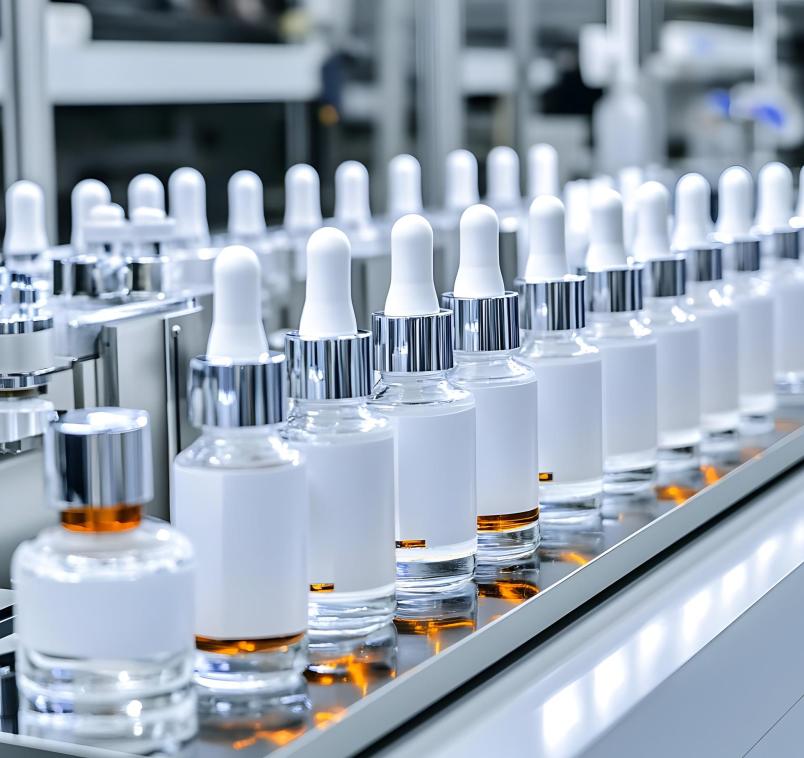
Medical aesthetic skincare reliability begins long before clinical use.
Manufacturers aligned with ISO 22716 (Cosmetic GMP) emphasize:
-
Batch-to-batch consistency
-
Hygiene and contamination control
-
Ingredient traceability
These factors directly influence product stability and safety in compromised-skin scenarios.
https://www.iso.org/standard/36437.html
For clinics and brands, GMP alignment reduces formulation risk and supports long-term protocol standardization.
How Clinics and Brands Should Evaluate Medical Aesthetic Skincare Products
From a decision-making perspective, clinics should assess products based on use-case performance, not marketing positioning.
Key evaluation criteria include:
-
Does the product remain stable on sensitized skin?
-
Is it compatible with common aesthetic procedures?
-
Can application be standardized across staff?
-
Is dosing controlled to minimize variability and hygiene risk?
Products that meet these criteria consistently outperform more complex formulations in clinical settings.
Frequently Asked Questions
Is medical aesthetic skincare necessary for all aesthetic treatments?
Most procedures temporarily compromise the skin barrier, making treatment-safe skincare beneficial in many cases.
How does medical aesthetic skincare differ from clinical skincare solutions?
Medical aesthetic skincare focuses specifically on post-procedure safety and device compatibility.
Can premium retail skincare replace medical aesthetic skincare?
Retail products are rarely designed for compromised skin states or clinical workflows.
Conclusion: Medical Aesthetic Skincare Is About Control and Consistency
Medical aesthetic skincare is not designed to impress patients.
It is designed to behave predictably when skin cannot.
By adopting treatment-safe, protocol-driven skincare systems, clinics reduce recovery variability, simplify workflows, and protect both patient outcomes and operational credibility.
To learn more about professional medical aesthetic skincare systems developed for real clinical environments, visit the Menanora homepage or speak directly with our team via the Contact Us page.