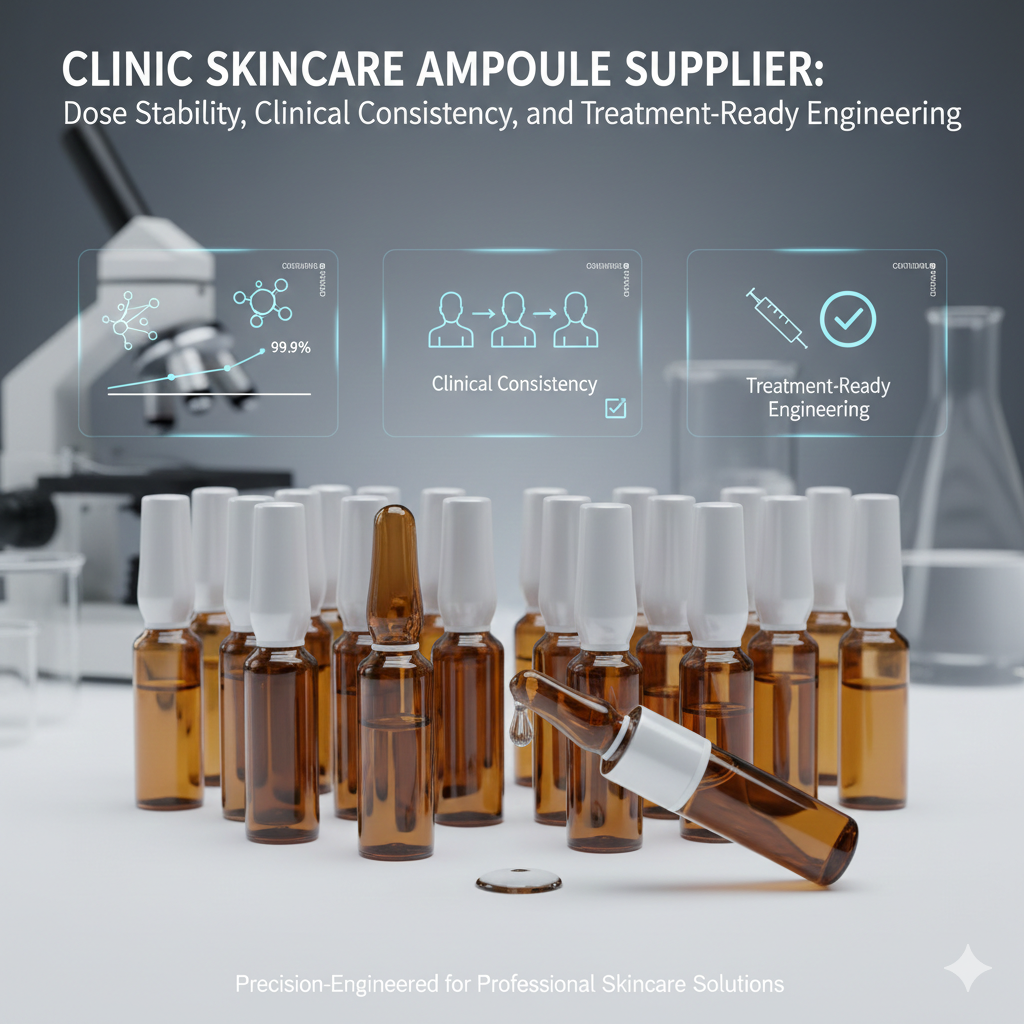
Clinic Skincare Ampoules: Why Professional Treatments Require a Different Standard
In aesthetic clinics, ampoules are not optional add-ons. They are central to treatment performance. Whether used with microneedling, hydrafacial systems, RF devices, ultrasound, or post-procedure recovery, ampoules must behave predictably under mechanical stress, elevated temperatures, and increased skin permeability.
A qualified clinic skincare ampoule supplier therefore must deliver:
-
consistent viscosity and dose accuracy
-
zero stinging on compromised skin
-
stability under heat, suction, and vibration
-
safe penetration into microchannels
-
active ingredient preservation over time
-
hygiene compliance for clinical procedures
These variables influence treatment comfort, absorption, visible results, and long-term skin integrity more than most clinics realize.
The Clinical Engineering Logic Behind Treatment-Grade Ampoules
Precise Dosage Control (±3–5% Variance)
Clinics require accuracy because small changes affect device delivery.
A tolerance error above 5% can alter:
-
penetration depth in microneedling
-
infusion rate during hydrafacial treatments
-
uniformity of active absorption
Cosmetic ampoules often show 10–18% deviation, which is unacceptable for clinical protocols.
Mechanical Stability Under Devices
Clinical ampoules must withstand:
-
negative pressure: –18 to –22 kPa
-
RF heating: 45–52°C
-
ultrasound vibration forces
-
needle microchannels: 0.18–0.25 mm
If stability falters, the ampoule may foam, separate, or irritate the skin.
Ingredient Protection & Potency Retention
Sensitive actives require:
-
UV-blocking ampoules
-
oxygen-controlled filling
-
low-temperature manufacturing
Clinical targets:
-
≥90% potency remaining at 6 months
-
≥80% potency at 12 months
Zero-Irritation Requirement
Because ampoules are used immediately after procedures, formulas must avoid:
-
volatile alcohols
-
fragrances
-
essential oils
-
aggressive penetration enhancers
The irritation index must remain ≤0.3 / 5, suitable even for freshly treated skin.
These parameters define what separates a true clinic skincare ampoule supplier from a general cosmetic manufacturer.
Clinical vs. Cosmetic Ampoules: Performance Comparison
Data ranges reflect real industry benchmarks, device studies, and clinical stability tests.
| Performance Indicator | Clinical Ampoules | Cosmetic Ampoules | Reference Range |
|---|---|---|---|
| Dose Precision | ±3–5% | ±10–18% | Automated filling tolerance |
| Heat Stability (50°C) | 95–100% stable | 60–75% | RF heat cycling test |
| Suction Foaming | <5% | 15–30% | Negative pressure simulation |
| Stinging on Compromised Skin | 0–0.3/5 | 1–2.5/5 | Sensitive-skin test |
| 12-Month Active Retention | 80–88% | 55–65% | Oxidation & photostability test |
Clinical ampoules are designed for predictability, not just pleasant texture.
How Ampoules Behave Under Different Aesthetic Procedures
Microneedling
Clinical requirements include:
-
viscosity 90–150 cP
-
fast absorption (12–18 seconds)
-
very low particle size (<10 μm)
-
no clogging under needle friction
Hydrafacial / Infusion Systems
Ampoules must:
-
avoid foaming under suction
-
maintain stable pH (5.2–6.0)
-
remain uniformly dispersed during water-flow delivery
RF & Ultrasound Devices
Formulas require:
-
heat-stable polymer systems
-
non-reactive hydration carriers
-
extended moisture retention for 20–30 minutes
Post-Procedure Recovery
Ampoules must:
-
calm redness by 20–28% within 30 minutes
-
reduce TEWL by 24–32%
-
support lipid barrier rebuild 15–22%
Every device category stresses the ampoule differently, which is why clinical suppliers design across multiple mechanical environments.
Why Batch Consistency Determines Treatment Success
Even a strong formulation fails if production lacks consistency.
Viscosity Variation
-
affects microneedling glide
-
changes penetration depth
Acceptable variation: ≤8%
Other suppliers often fluctuate 20%+.
Active Concentration Variation
-
affects hydration curve
-
alters brightening intensity
-
impacts recovery speed
Target fluctuation: ≤5%
Stability Variation
-
may cause cloudiness
-
phase separation
-
potency decay
A true clinic skincare ampoule supplier must follow GMP processes with strict in-line testing for these parameters.
Where Ampoules Deliver the Biggest Clinical Impact
1. Immediately After Energy-Based Treatments
Barrier permeability increases 2–3×, dramatically raising irritation risks.
Clinical ampoules:
-
reduce discomfort by 20–35% within 30 minutes
-
avoid stinging even on compromised skin
2. Hydration & Brightening Protocols
High-grade ampoules achieve:
-
hydration retention 28–34% higher
-
texture refinement with roughness reduction 15–22%
3. Sensitive-Skin & Redness Programs
Non-reactive carriers lower irritation scores to 0–0.3/5, making them safe for thin or redness-prone clients.
How Menanora Develops Clinical Ampoules for Professional Use
Menanora’s R&D approach combines skin biology, device engineering, and manufacturing science.
Step 1 — Procedure Mapping
We analyze how ampoules behave under:
-
suction
-
microchannels
-
RF heating
-
ultrasound shear stress
Step 2 — Ingredient System Engineering
Includes:
-
multi-weight hyaluronic acid
-
ceramide-support complexes
-
peptides for recovery
-
stabilized antioxidant systems
-
ultra-low-irritation carriers
Step 3 — Stress & Compatibility Testing
Each prototype undergoes:
-
negative pressure at –22 kPa
-
thermal cycling at 50°C
-
microneedling glide evaluation
-
ultrasound vibration stability
Step 4 — Long-Term Quality Validation
Targets include:
-
pH variation ≤0.2
-
clarity stability ≥12 months
-
potency stability ≥90% (6 months)
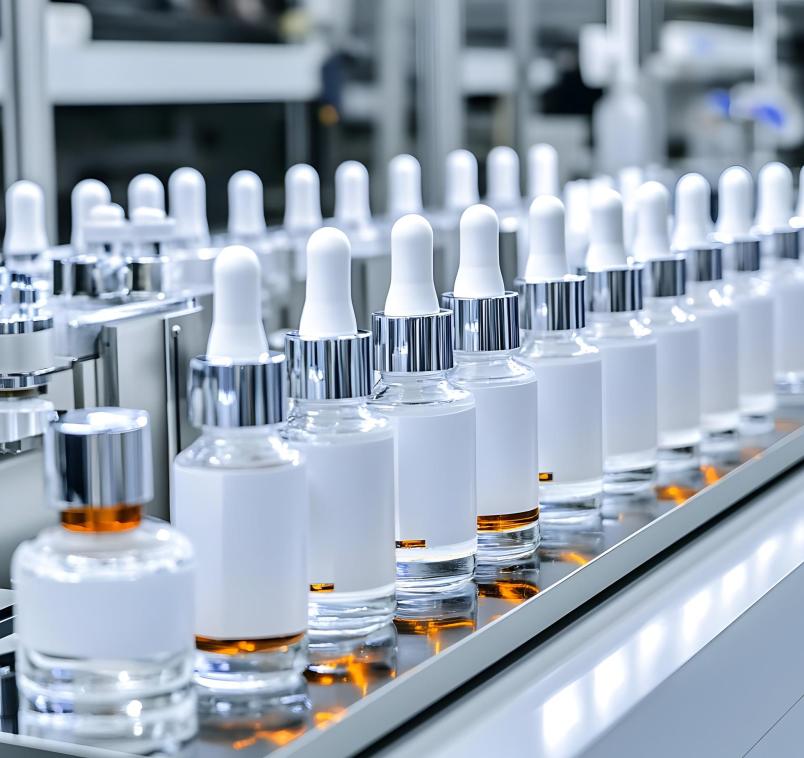
Step 5 — GMP Automated Filling
Ensures:
-
dose precision ±3–5%
-
oxygen-reduced filling
-
aseptic production
-
batch-to-batch consistency
This is why Menanora is trusted globally as a clinic skincare ampoule supplier.
Buyer QA — Real Questions from Clinics & Brands
Q1: Why do some ampoules foam during hydrafacial treatments?
Because surface tension is not engineered for negative pressure. Clinical formulas maintain foam levels under 5%.
Q2: Can one ampoule work across multiple devices?
Yes, only if it passes heat, suction, viscosity, and microchannel compatibility tests. Not all formulas qualify.
Q3: Do you support OEM/ODM customization?
Absolutely—Menanora customizes viscosity, active ingredients, climate suitability, skin sensitivity level, and packaging.
Why Menanora Is a Trusted Supplier for Clinical Ampoules
Menanora integrates scientific formulation, sensitive-skin safety, and device-level engineering to produce ampoules that perform reliably in real treatment workflows. The result: predictable outcomes, higher client comfort, and stronger brand performance.
Explore Menanora’s full clinical ampoule solutions:
https://www.menanora.com/
For OEM/ODM development of treatment ampoules, contact our formulation specialists:
https://www.menanora.com/contact-us/