In many aesthetic clinics, practitioners share the same frustrations: clients experiencing post-treatment sensitivity, serums that sting after exfoliation, gels that collapse under heat, and formulations that foam during suction-based facials. These issues interrupt workflow, reduce treatment consistency, and can even erode client trust.
Clients, too, feel the impact—tightness, irritation, uneven glow, and short-lived results. They expect professional treatments to deliver comfort and visible improvement, yet many conventional formulas cannot meet the physiological demands of device-assisted procedures.
This is where a new generation of professional facial care products becomes essential. Menanora develops treatment-safe, biologically aligned formulations that remain stable under stress while respecting sensitive or compromised skin conditions.
Understanding Why Professional Formulas Must Behave Differently
Before diving into technical features, it helps to understand a key principle: clinical treatments amplify both product performance and product flaws.
To address this, manufacturers must engineer formulas to withstand heat, suction, vibration, exfoliation, and post-procedure permeability.
Formulation Architecture: How Professional Facial Products Are Engineered
To create dependable professional facial care products, a multi-phase formulation logic is required.
Lead-in
With client expectations rising and treatment menus expanding, product engineering must surpass cosmetic benchmarks.
Formulation Priorities Include:
-
Controlled absorption to prevent stinging on sensitized skin
-
Heat-stable polymers for RF and ultrasound facial protocols
-
Low-foam systems for hydradermabrasion and suction-assisted facials
-
Barrier-support complexes for recovery and hydration
-
Antioxidant protection to reduce oxidative stress post-treatment
Each component of the formulation must be predictable, safe, and compatible with procedural demands.
Stability and Performance: What Professionals Expect from Their Products
Before choosing products, clinics often evaluate stability. The stress conditions in a facial treatment room are unlike normal skincare application.
Lead-in
To meet clinical expectations, formulas must demonstrate stability far beyond consumer-grade products.
Key Performance Requirements:
-
withstand temperatures up to 50°C
-
maintain viscosity through repeated pressure and glide
-
remain clear, non-cloudy, and non-separating over time
-
avoid micro-foaming under negative pressure
-
minimize irritation even for post-peel or post-laser skin
These expectations define why professional formulations require significant R&D investment and precise engineering.
Data Table: Professional vs. Consumer Facial Product Performance
Reference ranges derived from clinical device testing, dermatology safety trials, and formulation stability studies.
| Parameter | Professional Facial Care Products | Consumer Skincare Products | Reference Range |
|---|---|---|---|
| Heat Stability (50°C) | 95–100% | 60–75% | Thermal stress cycle |
| Irritation Score | 0–0.5 / 5 | 1.5–2.5 / 5 | Sensitive skin patch test |
| Viscosity Retention | 90–98% | 60–80% | Device glide simulation |
| Foam Level Under Suction | <5% | 15–25% | Negative pressure test |
| Hydration Retention (4 hrs) | 25–35% | 10–18% | TEWL study |
Professional-grade performance is achieved only through deliberate formulation design—not cosmetic improvisation.
Device Compatibility: The Hidden Requirement Most Products Ignore
Most consumer products are not designed to interact with professional devices.
This creates major issues:
-
hydrating gels that liquefy during RF
-
serums that clog microneedling cartridges
-
emulsions that destabilize under ultrasound vibration
-
textures that fracture under suction or mechanical exfoliation
Lead-in
To avoid these problems, professional facial care products must be engineered with device-specific tolerances.
Engineering Parameters Include:
-
viscosity windows (e.g., 250–550 cP for ultrasound glide)
-
shear stability for vibration-based devices
-
negative-pressure resistance for hydrafacial equipment
-
pH control for post-procedure safety
This ensures treatment flow remains smooth, predictable, and safe for clients.
Sensitive Skin Compatibility: A Non-Negotiable Standard
Clients increasingly present with sensitivity, barrier impairment, or reactive tendencies. Post-treatment skin also behaves like sensitive skin due to increased permeability.
Lead-in
This means professional formulations must remain safe even when the skin is at its most vulnerable.
Required Safety Standards:
-
irritation index ≤0.3 / 5
-
alcohol-free, fragrance-free, essential oil-free
-
controlled penetration systems
-
polysaccharide-based comfort agents
-
lipid-balancing and TEWL-reducing actives
Clinical-grade serums and gels calm the skin while reinforcing the barrier—keeping the treatment experience pleasant and reducing the risk of backlash reactions.
Treatment Workflow Integration: Products Designed for Real Practice
For aesthetic practitioners, products must support—not interrupt—the treatment flow.
Lead-in
When products integrate smoothly into protocols, the overall client experience improves significantly.
Key Integration Features:
-
quick absorption without heavy residue
-
adequate glide for massage and device movement
-
instant soothing after exfoliation or extraction
-
support for multi-step routines (cleanse → exfoliate → infuse → recover)
-
predictable layering behavior with no pilling or separation
Professionally engineered products help practitioners deliver consistent results across all facial programs.
Customization Needs for Clinics and Brands
Professional buyers require more than off-the-shelf solutions—they require adaptability.
Lead-in
As treatment menus evolve, customized skincare becomes a strategic advantage.
Menanora Provides:
-
viscosity customization for different devices
-
active-level adjustments depending on treatment intensity
-
sensitive-skin variants for post-laser protocols
-
region-specific regulatory compliance
-
fragrance-free, essential-oil-free medical formulas
-
packaging sterilization and precise dosage systems
This flexibility helps clinics build signature programs and helps brands create differentiated professional lines.
How Menanora Develops Professional Facial Care Products
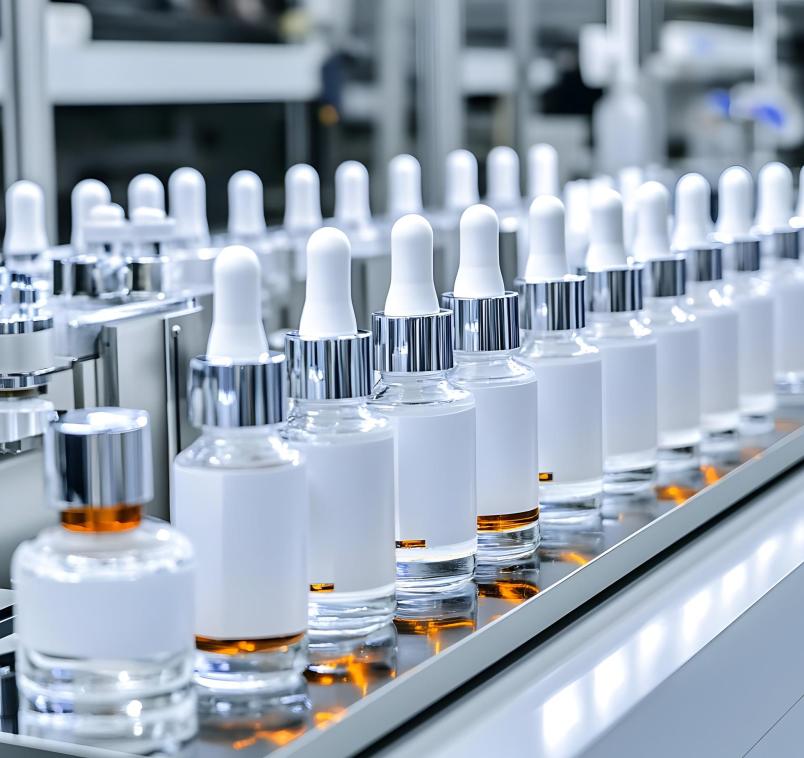
Menanora applies biological engineering, dermatology science, and treatment-based stability testing to develop reliable professional skincare.
Lead-in
Our process is designed around real clinic workflows—not theoretical formulation.
Development Framework:
-
Skin Condition Mapping
Understanding hydration loss, barrier shifts, inflammatory patterns during facials and procedures. -
Ingredient Architecture
Using multi-weight HA, ceramide systems, peptides, anti-inflammatory complexes, and stabilized antioxidants. -
Mechanical Stress Testing
Testing formulas under:-
heat (up to 50°C)
-
suction
-
vibration
-
glide pressure
-
post-exfoliation absorption
-
-
Sensitive-Skin Validation
Patch tests ensure zero-sting, low-irritation behavior. -
GMP Manufacturing
Ensures purity, precision filling, microbial safety, and batch consistency.
Through this process, Menanora delivers professional facial care products that behave consistently across treatments, client profiles, and environmental conditions.
Buyer Q&A — Real Questions from Clinics
Q1: Why do some serums sting after exfoliation?
Because they are not engineered for compromised skin. Professional serums avoid volatile solvents and use balanced osmoprotective systems.
Q2: Can one product work across multiple devices?
Yes, but only if viscosity, heat stability, and shear tolerance are engineered for multi-device compatibility.
Q3: Can Menanora create exclusive formulas for individual clinics?
Absolutely—we support OEM/ODM development for signature facial programs.
Why Clinics Trust Menanora for Professional Facial Care
Menanora blends clinical science, formulation engineering, and treatment workflow insights to create facial care solutions that are safe, predictable, and adaptable. Our products support practitioners in delivering consistent, comfortable, and high-performing facial treatments.
Explore Menanora’s facial care systems:
https://www.menanora.com/
For OEM/ODM development of professional facial care products, reach our formulation team:
https://www.menanora.com/contact-us/