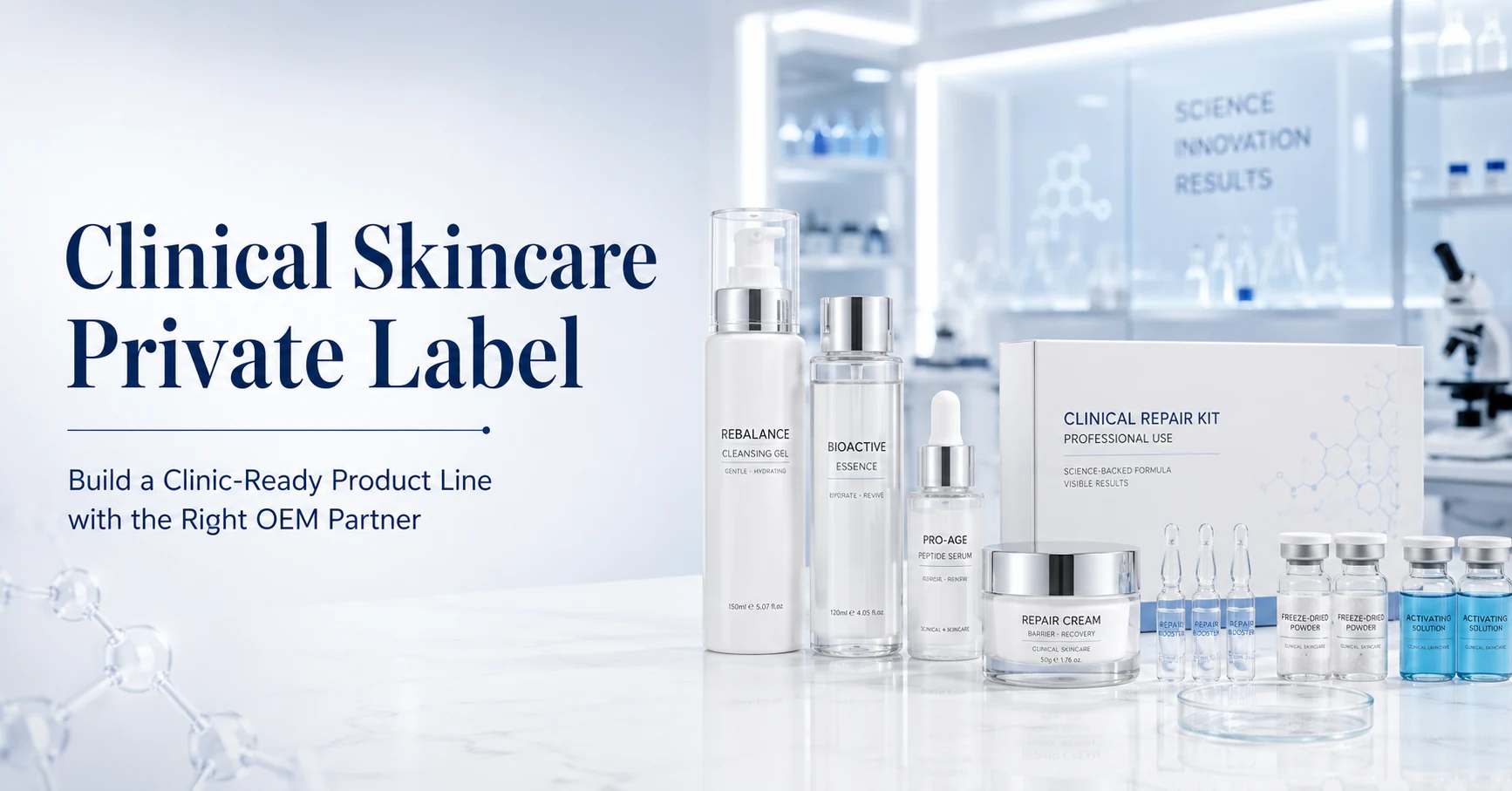
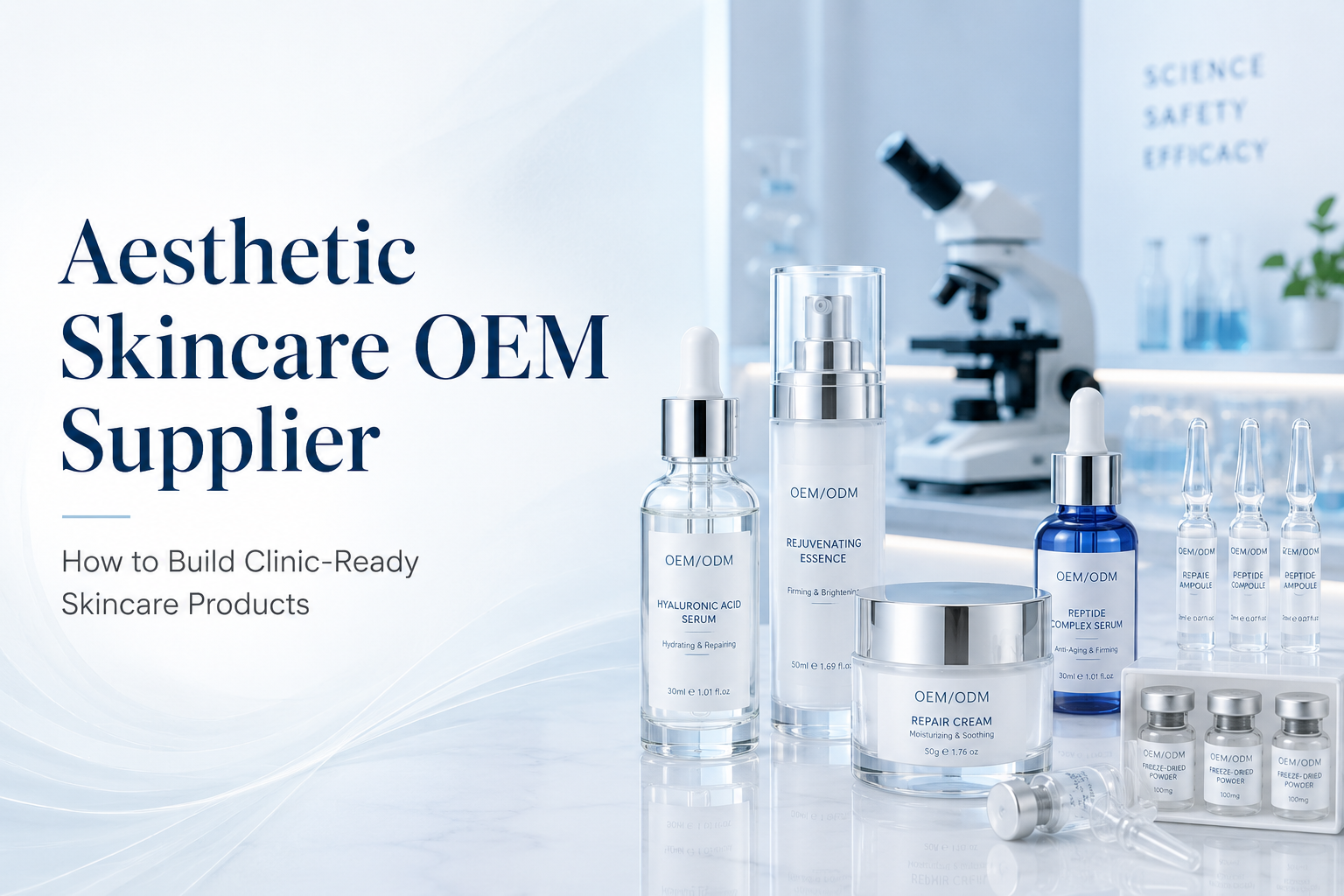
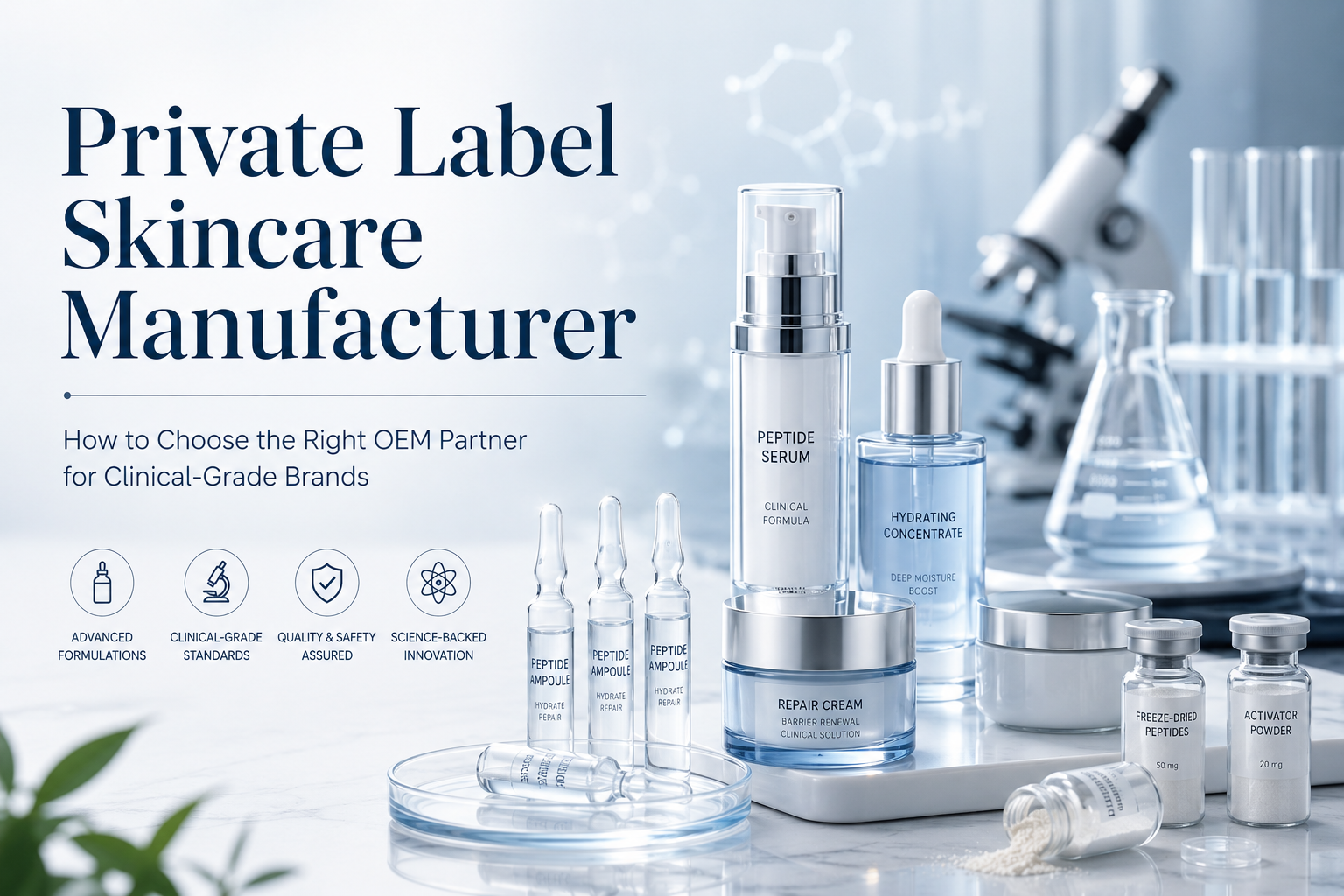
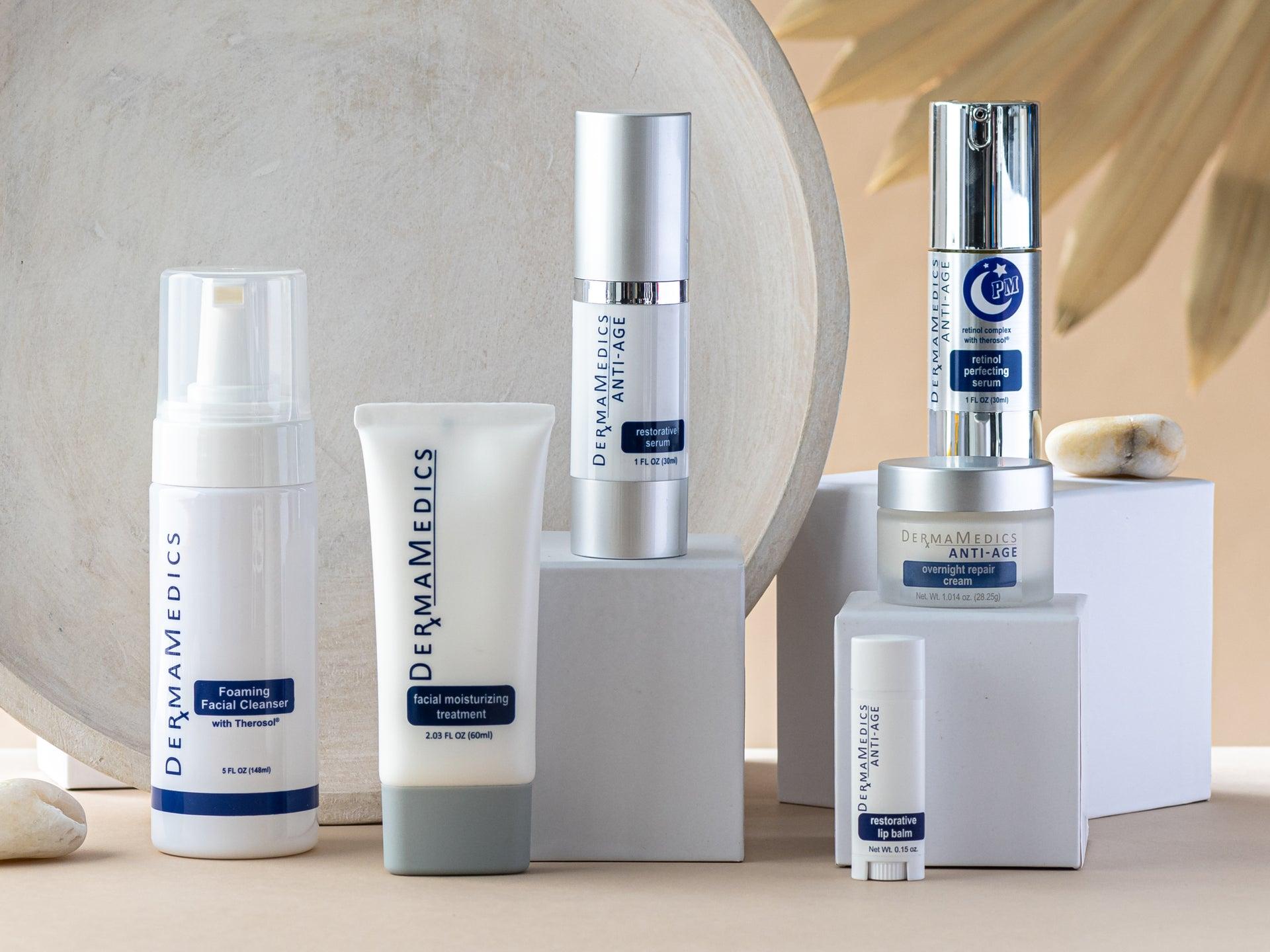
Medical skincare OEM is becoming an important solution for aesthetic clinics, professional skincare brands, and beauty distributors that want to develop products with stronger clinical positioning. Instead of selling generic skincare items, clinics can build their own branded product lines for pre-treatment care, post-procedure recovery, hydration, barrier repair, and long-term skin maintenance.
For buyers, the key question is not simply “Who can make skincare products?” The better question is: Can this manufacturer support clinical-grade formulas, active ingredients, packaging, compliance, quality control, and long-term brand growth?
Menanora Biotech provides clinical skincare R&D, OEM/private label manufacturing, and professional care solutions for medical aesthetics. You can learn more from the homepage here:
https://www.menanora.com/
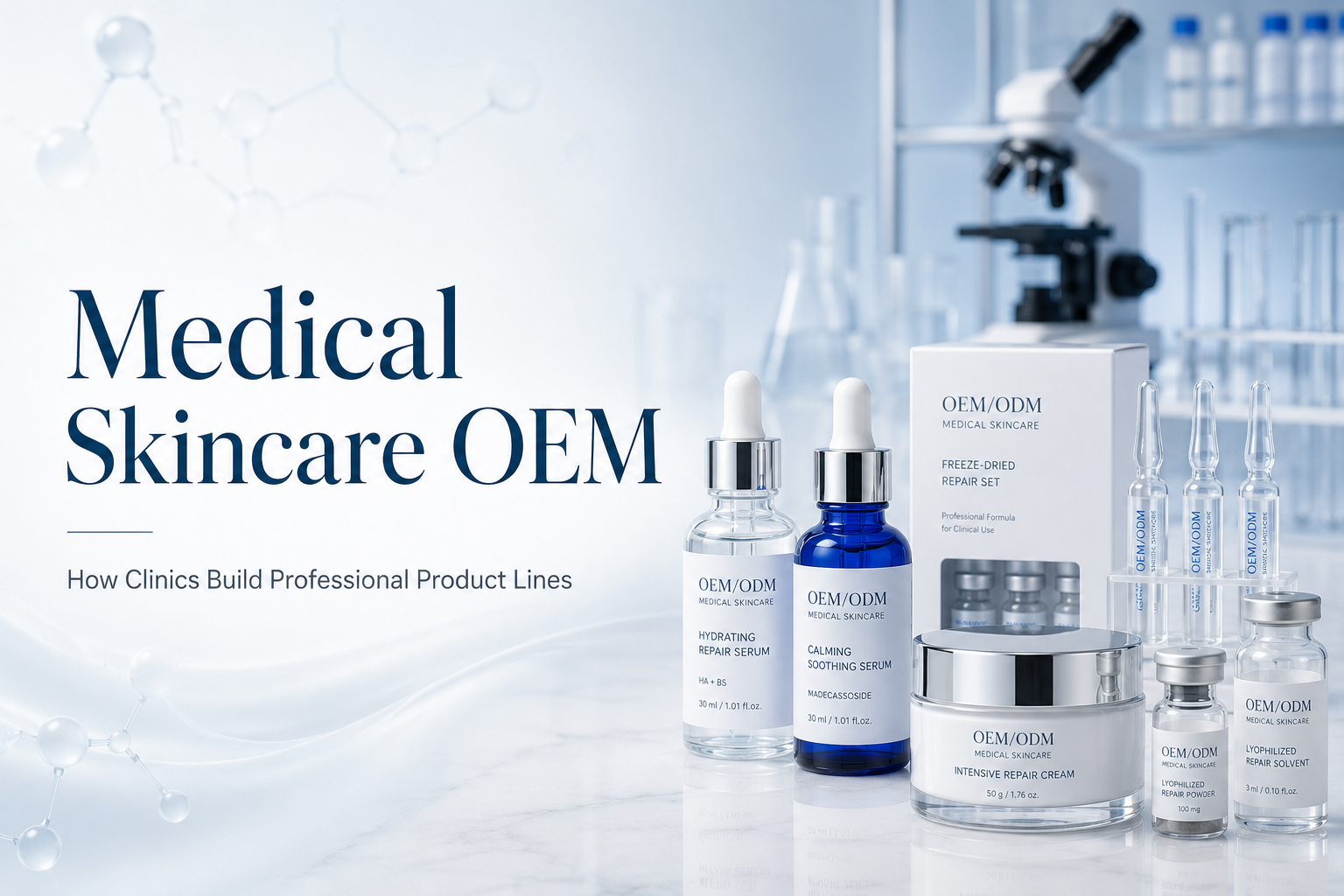
What Is Medical Skincare OEM?
Medical skincare OEM means a manufacturer develops or produces skincare products for clinics, skincare brands, or distributors under their own brand name. Compared with standard cosmetic OEM, medical skincare OEM usually focuses more on professional use scenarios, skin recovery, barrier repair, anti-aging care, and post-treatment support.
Common product directions include:
- Post-treatment recovery kits
- Peptide serums
- HydraFacial boosters
- Freeze-dried skincare
- Repair creams
- Soothing masks
- Barrier repair products
- Anti-aging maintenance products
- Clinic-branded skincare sets
This model is especially useful for aesthetic clinics that want to extend their service from in-clinic treatments to at-home skincare maintenance.
Why Clinics and Brands Need Medical Skincare OEM
Aesthetic clinics often provide treatments such as laser care, microneedling, peeling, HydraFacial, oxygen infusion, or skin rejuvenation programs. After these treatments, customers usually need gentle, stable, and targeted skincare products to support comfort and long-term results.
With a reliable medical skincare OEM partner, clinics and brands can create products that match their service flow.
For example:
| Business Type | Main Need | Suitable OEM Products |
|---|---|---|
| Aesthetic Clinics | Post-treatment care and repeat sales | Recovery kits, repair creams, soothing masks |
| Skin Management Centers | Daily treatment support | HydraFacial boosters, hydration serums |
| Skincare Brands | Differentiated product line | Peptide serum, freeze-dried serum, anti-aging cream |
| Distributors | Stable supply and marketable products | Ready-to-brand clinical skincare series |
| Medspa Chains | Standardized care protocol | Pre-treatment and post-treatment product sets |
Medical skincare OEM is not only about product production. It is also a way to improve customer experience, increase brand value, and create repeat purchase opportunities.
What Products Can Be Developed?
A professional OEM partner should support different product categories for clinical skincare and daily maintenance.
1. Post-Treatment Recovery Products
Post-treatment products are designed for skin after professional aesthetic procedures. The focus is usually soothing, hydration, barrier repair, and gentle maintenance.
Typical products include:
- Soothing spray
- Repair cream
- Recovery mask
- Barrier repair serum
- Sunscreen
- Post-treatment care kit
Menanora’s clinical care solutions include three care stages: pre-treatment preparation, 0–48 hour immediate recovery, and 3–14 day long-term maintenance. This structure is suitable for clinics that want a complete care protocol instead of single-product sales.
Related page:
https://www.menanora.com/ForClinics
2. HydraFacial and Treatment Boosters
HydraFacial boosters and treatment serums are suitable for professional skin management centers and clinics. These products can be used to support hydration, brightening, nourishment, and treatment enhancement.
Common ingredients may include hyaluronic acid, vitamin C, peptides, marine collagen, and soothing ingredients.
3. Freeze-Dried Skincare
Freeze-dried skincare is useful for high-value active formulas. It is often used for products containing sensitive ingredients such as PDRN, EGF, peptides, collagen, or hyaluronic acid.
Freeze-dried products can help brands create a more premium product image, especially for repair, rejuvenation, and post-treatment positioning.
4. Daily Maintenance and Anti-Aging Products
After professional treatments, customers still need daily skincare. This creates a strong opportunity for clinics and brands to sell maintenance products.
Common products include:
- Peptide serum
- Moisturizing cream
- Anti-aging cream
- Brightening serum
- Eye cream
- Hydrating mask
- Barrier repair lotion
You can view Menanora’s product direction here:
https://www.menanora.com/products
What Makes a Good Medical Skincare OEM Partner?
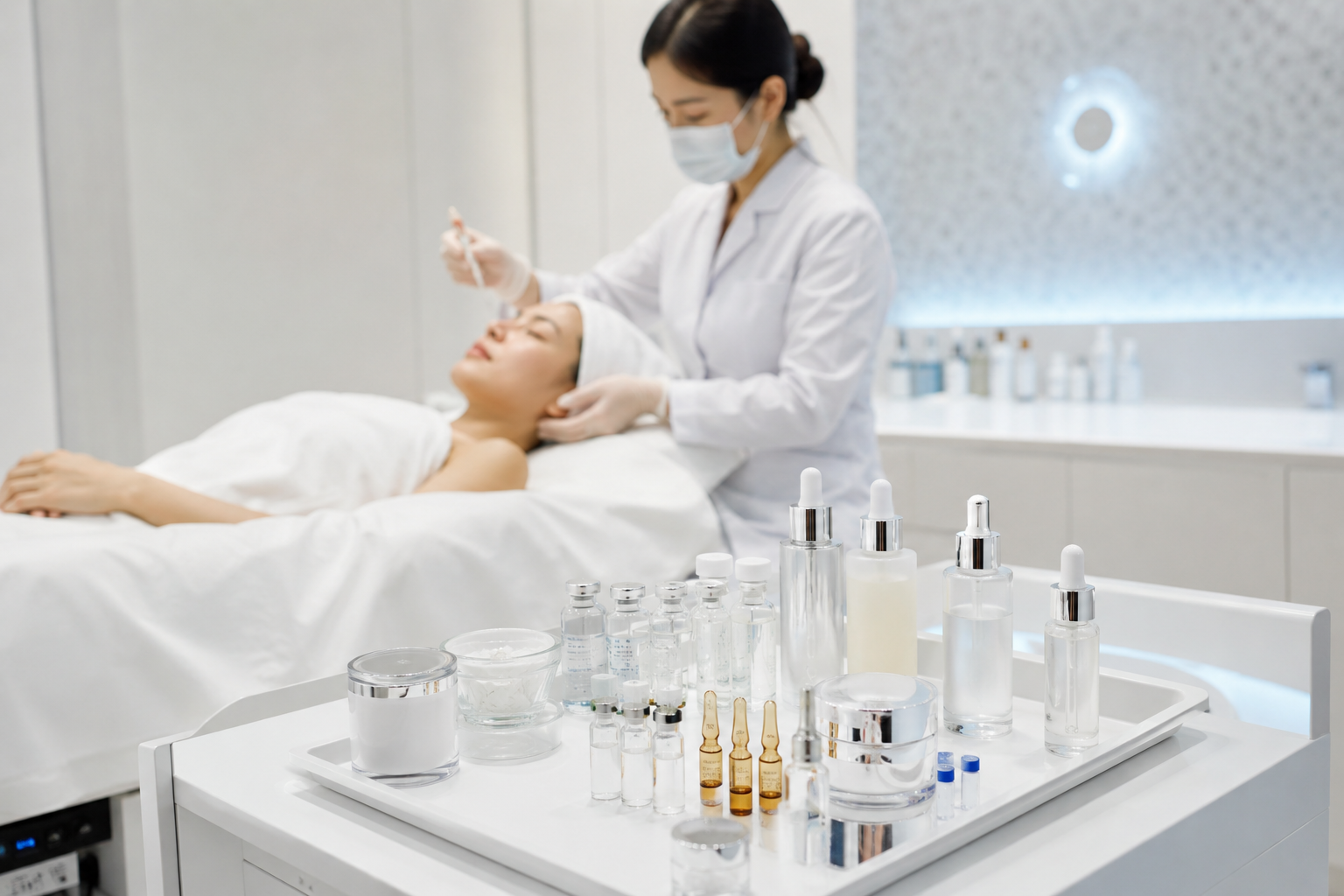
Choosing a medical skincare OEM partner requires more than comparing price. Buyers should evaluate the manufacturer’s full capability.
Formula R&D Capability
Clinical skincare products need stable formulas and suitable active ingredients. A good OEM partner should understand skin concerns, ingredient compatibility, texture, pH, stability, and packaging protection.
Menanora’s R&D direction includes dermatology, biotechnology, pharmaceutical chemistry, botanical actives, peptides, and professional skincare formulas.
Learn more about Menanora’s background:
https://www.menanora.com/about-us
Packaging and Branding Support
Packaging should match both the formula and the target market. For example, airless bottles may be suitable for active serums, vials may fit freeze-dried products, and kits may work well for post-treatment care.
A strong OEM partner should support:
- Bottle and jar selection
- Ampoule and vial packaging
- Label and box design
- Brand visual customization
- Clinic-branded product sets
- Packaging compatibility testing
Compliance and Testing
For medical skincare OEM projects, compliance is a key trust factor. Brands should confirm whether the manufacturer can support ingredient review, product documentation, label review, stability testing, microbial control, and target-market requirements.
This is especially important for brands selling in the United States, Europe, the Middle East, Southeast Asia, or professional clinic channels.
Quality Control
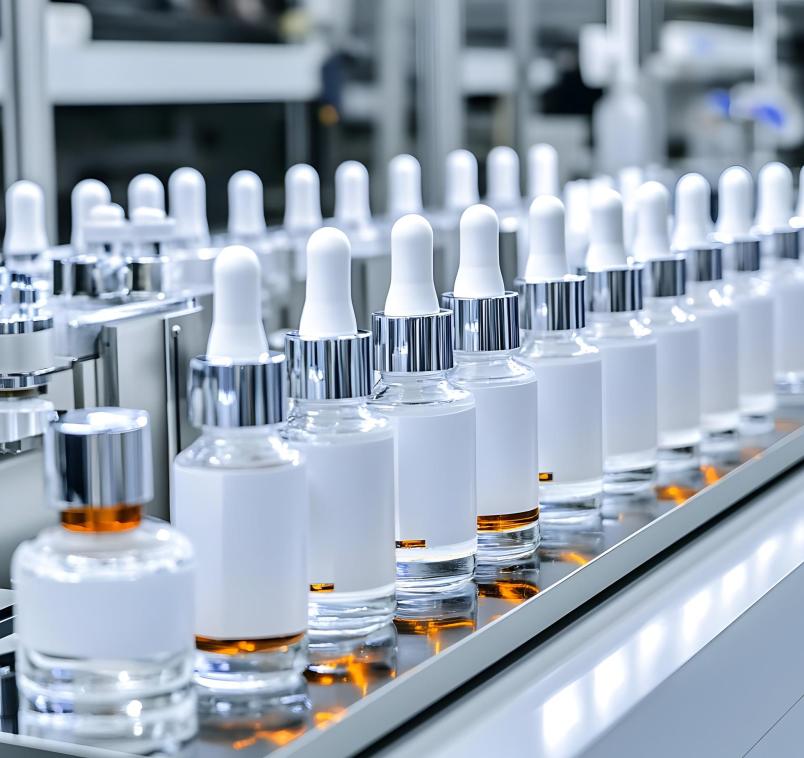
Quality control affects every reorder and customer review. A reliable manufacturer should control raw materials, batching, filling, packaging, inspection, storage, and shipment.
Important QC points include:
- Raw material inspection
- Formula consistency
- Microbial testing
- Filling accuracy
- Packaging sealing
- Batch traceability
- Finished product inspection
Menanora’s OEM service covers consultation, formula development, packaging, compliance, production, quality control, logistics, and after-sales support.
OEM service page:
https://www.menanora.com/privatelabel-oem
Medical Skincare OEM Service Process
A clear process helps reduce project risk and improves launch efficiency.
| Step | Process | What It Solves |
| 1 | Product Brief | Defines target market, function, price range, and product concept |
| 2 | Formula Development | Builds or adjusts formula based on required skin benefits |
| 3 | Packaging Design | Matches formula, brand image, and sales channel |
| 4 | Testing & Compliance | Supports stability, safety, label, and market requirements |
| 5 | Production & QC | Ensures batch consistency and product quality |
| 6 | Logistics & Reorder Support | Helps with delivery, repeat orders, and future product upgrades |
This process is useful for both new skincare brands and established clinics that want to launch their own professional product line.
How to Build a Clinic Skincare Product Line
A strong product line should not be random. It should match the customer journey before and after treatment.
A practical clinic skincare line can include:
Pre-Treatment Products
- Gentle cleanser
- Toner
- Hydration serum
- Barrier support product
Immediate Recovery Products
- Soothing spray
- Repair cream
- Recovery mask
- Sensitive skin serum
Long-Term Maintenance Products
- Peptide serum
- Moisturizer
- Sunscreen
- Anti-aging cream
- Brightening product
This structure helps clinics create a complete skincare protocol and makes it easier for customers to understand when and how to use each product.
Why Menanora Is Suitable for Medical Skincare OEM
Menanora Biotech is positioned as a clinical skincare R&D and OEM/private label manufacturer. Its product system covers professional clinic care, HydraFacial boosters, freeze-dried skincare, post-treatment recovery, daily maintenance, and anti-aging formulas.
For clinics, Menanora can help create skincare products that match treatment stages. For skincare brands, Menanora can support formula development, packaging, compliance, production, and quality control. For distributors, Menanora offers product categories that are easier to position in professional skincare channels.
This makes Menanora suitable for buyers who want more than simple private label skincare. It is a practical partner for clinical-grade, treatment-oriented, and brandable skincare product development.
FAQ
1. What is medical skincare OEM?
Medical skincare OEM is a manufacturing service that helps clinics, skincare brands, and distributors develop branded skincare products for professional care, post-treatment recovery, hydration, repair, and daily maintenance.
2. Who needs medical skincare OEM services?
Aesthetic clinics, medspas, skin management centers, skincare brands, distributors, and beauty chains can use medical skincare OEM services to create their own branded product lines.
3. What products can Menanora develop?
Menanora can support HydraFacial boosters, freeze-dried skincare, post-treatment recovery kits, peptide skincare, daily maintenance products, anti-aging formulas, and clinical skincare solutions.
4. Can clinics create their own skincare brand?
Yes. Clinics can create private label or OEM skincare products with their own logo, packaging, formula direction, and product sets.
5. What should I check before choosing a medical skincare OEM manufacturer?
You should check R&D capability, product experience, packaging support, compliance knowledge, quality control system, MOQ, lead time, and long-term reorder support.
6. Is medical skincare OEM suitable for post-treatment products?
Yes. Post-treatment recovery is one of the strongest applications for medical skincare OEM, especially for clinics offering laser, microneedling, peeling, HydraFacial, or skin repair treatments.
Conclusion
Medical skincare OEM helps clinics and skincare brands build professional product lines with stronger product positioning, better treatment support, and higher repeat purchase potential.
The right OEM partner should provide formula R&D, active ingredient knowledge, packaging design, compliance support, production control, and long-term after-sales service. For clinical skincare products, these capabilities are especially important because customers expect safety, consistency, and visible product value.
Menanora Biotech supports medical skincare OEM projects for aesthetic clinics, skincare brands, distributors, and professional beauty businesses. If you are planning to develop post-treatment skincare, HydraFacial boosters, peptide serums, freeze-dried skincare, or anti-aging maintenance products, Menanora can help turn your concept into a market-ready product line.
Start your OEM skincare project here:
https://www.menanora.com/privatelabel-oem