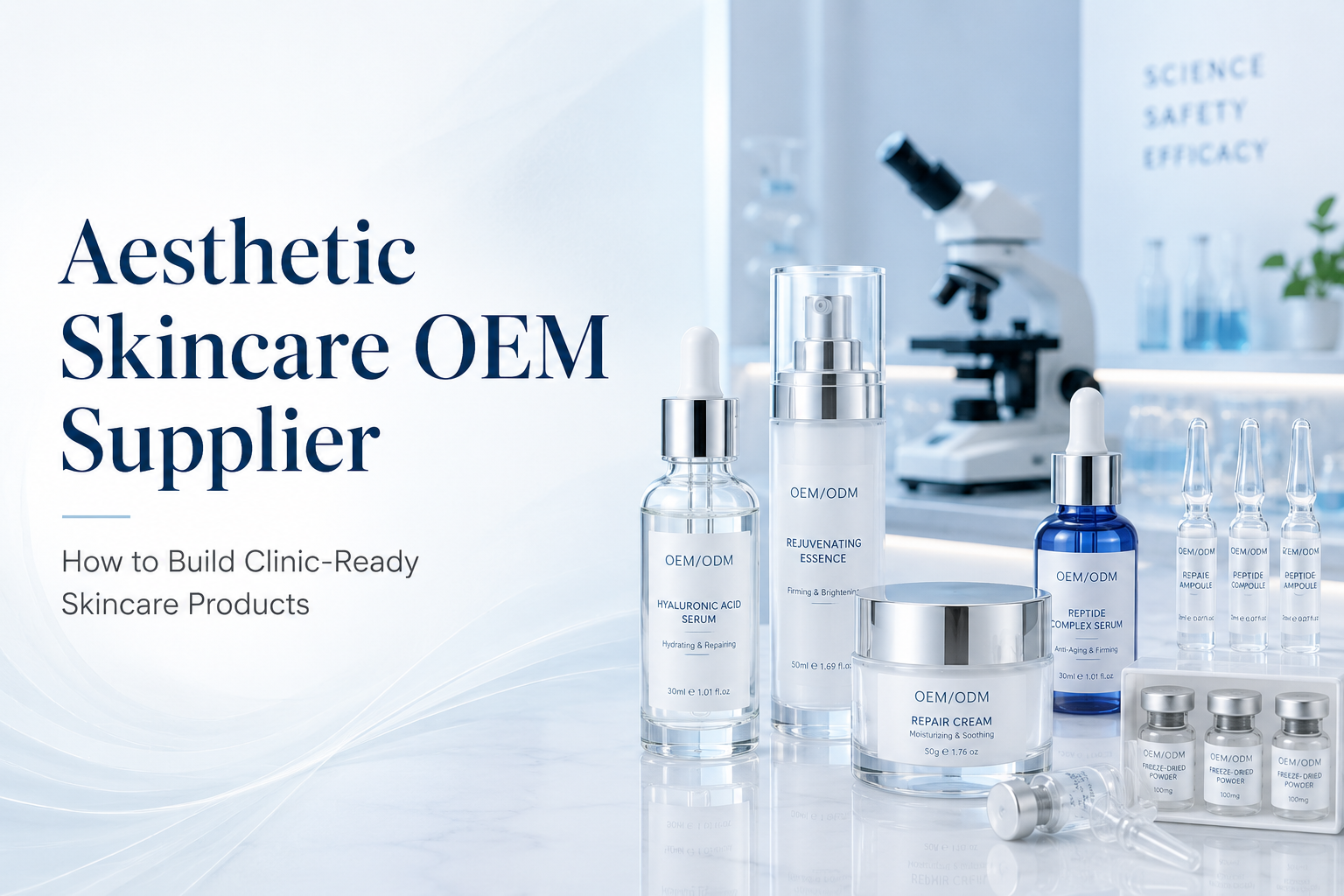
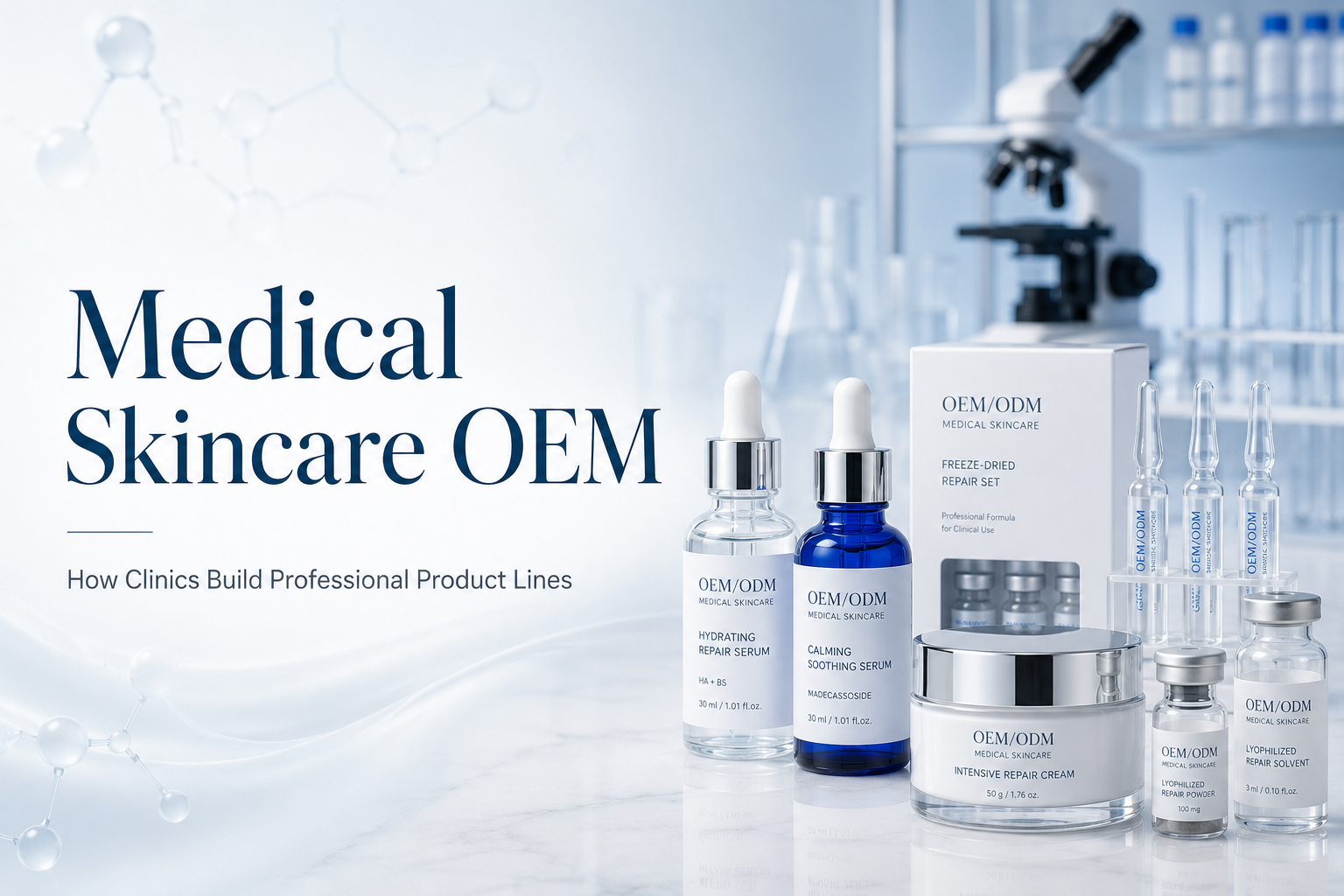
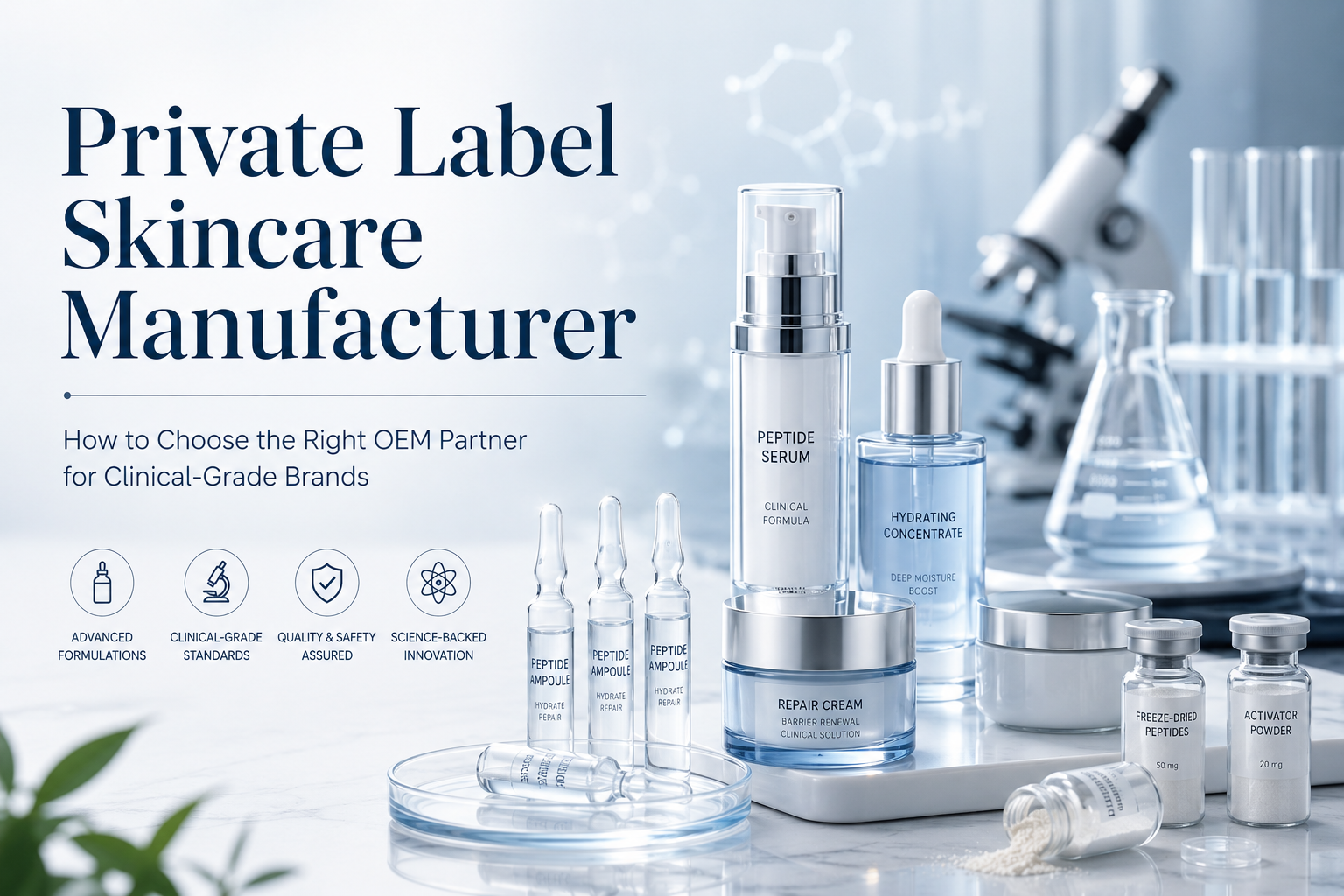
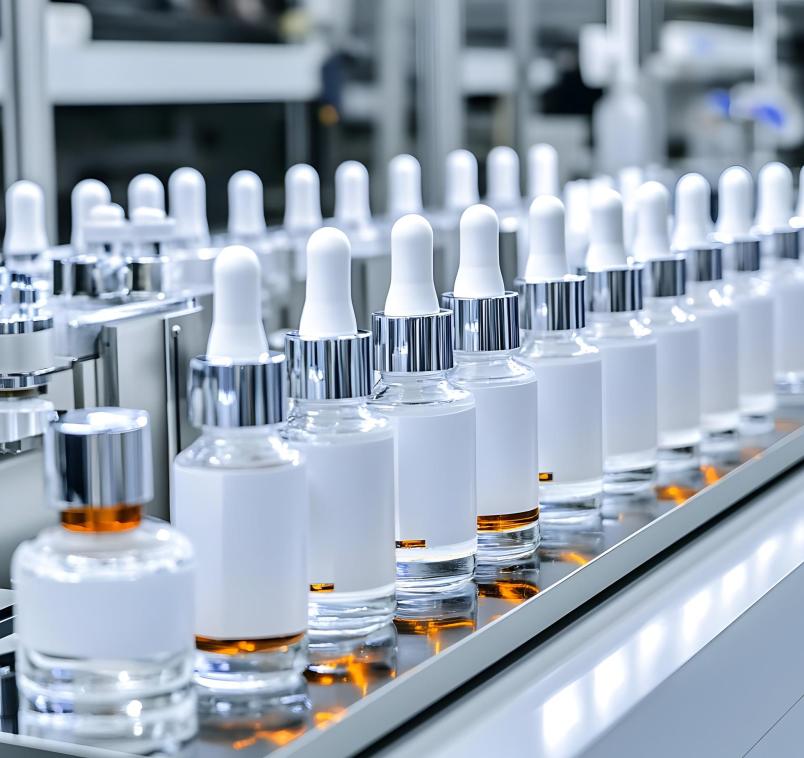
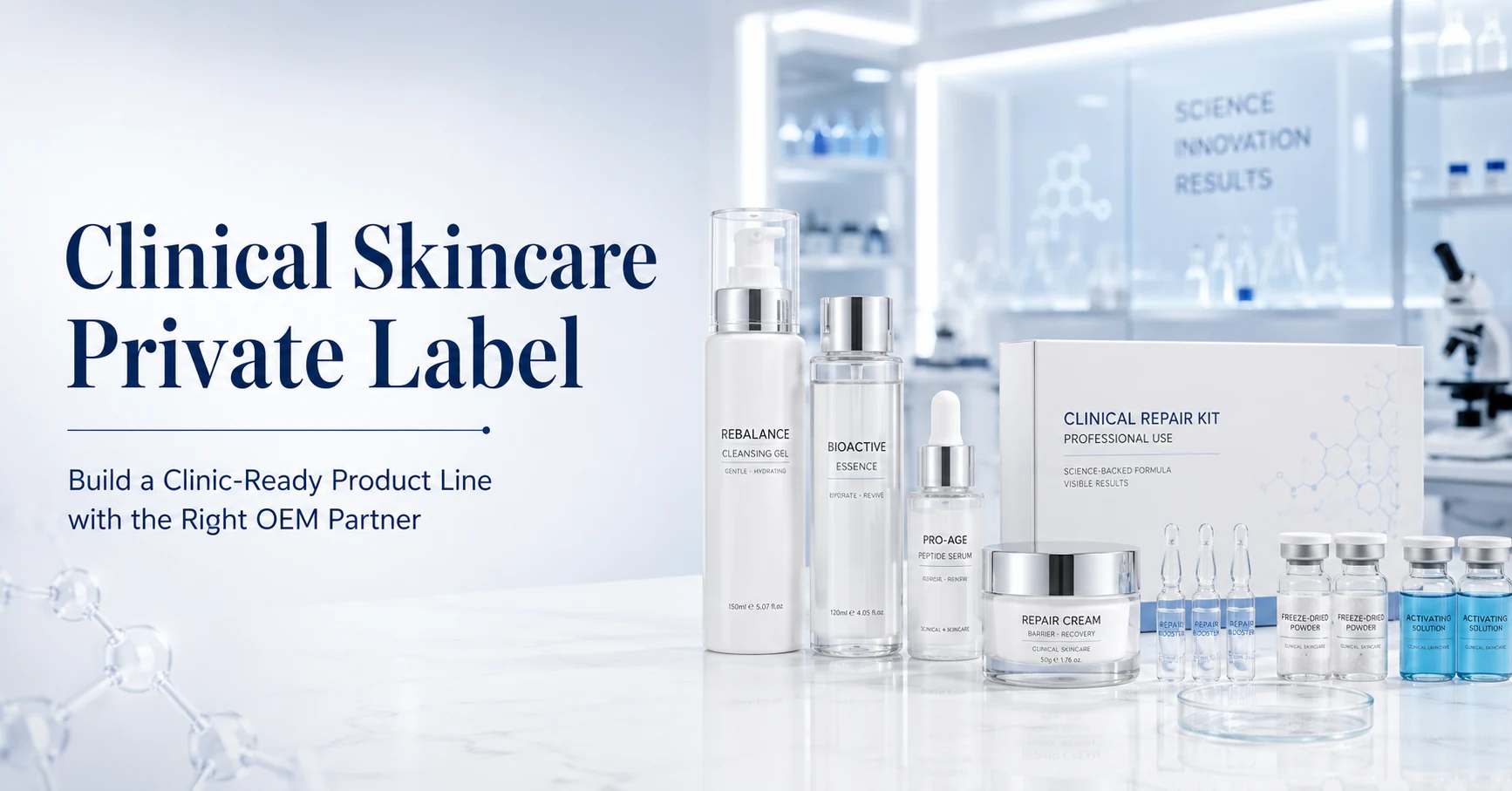
Clinical skincare private label is becoming a strong growth opportunity for aesthetic clinics, medspas, skincare brands, and distributors. Instead of selling generic skincare products from other brands, businesses can launch their own clinic-ready skincare line with customized formulas, packaging, and treatment-based product systems.
For buyers, the key value is not only having a logo on a bottle. A successful clinical skincare private label project should help you create products that match real skin concerns, professional treatment scenarios, post-procedure recovery needs, and long-term customer maintenance.
Menanora Biotech supports clinical-grade skincare R&D, private label manufacturing, and OEM skincare solutions for clinics, brands, and distributors. With product capabilities covering post-treatment recovery kits, HydraFacial boosters, freeze-dried skincare, peptide serums, repair creams, and anti-aging maintenance products, Menanora helps buyers turn skincare concepts into market-ready product lines.
Learn more about Menanora here:
Menanora Homepage
About Menanora
Private Label & OEM Service
What Is Clinical Skincare Private Label?
Clinical skincare private label means a manufacturer produces professional skincare products under your own brand name. These products are usually developed for aesthetic clinics, skin management centers, dermatology-related beauty channels, medspas, and premium skincare brands.
Compared with ordinary private label skincare, clinical skincare focuses more on:
- Treatment support
- Skin barrier repair
- Post-procedure recovery
- Hydration and soothing
- Anti-aging maintenance
- Active ingredient formulas
- Professional product protocols
- Stable quality and compliance support
This makes clinical skincare private label especially suitable for businesses that want to create a more professional image and stronger customer trust.
Why Clinics and Brands Choose Clinical Skincare Private Label
Many clinics already provide treatments such as laser care, microneedling, peeling, HydraFacial, oxygen infusion, and skin rejuvenation. But after the treatment, customers often ask: “What should I use at home?”
This is where private label skincare becomes valuable.
With your own product line, you can:
- Recommend products that match your treatment protocol
- Improve post-treatment customer care
- Increase repeat purchases
- Build your own clinic or brand identity
- Create bundled skincare sets
- Reduce dependence on third-party retail brands
- Improve customer retention after procedures
For skincare brands and distributors, clinical private label products can also create stronger market differentiation. Instead of competing only on price, you can build product lines around professional ingredients, clinical care scenarios, and clear skin benefits.
Who Should Launch a Clinical Skincare Private Label Line?
Clinical skincare private label is suitable for different types of buyers.
| Buyer Type | Main Business Goal | Suitable Product Direction |
|---|---|---|
| Aesthetic Clinics | Improve aftercare and product sales | Post-treatment kits, repair creams, soothing masks |
| Medspas | Build professional retail skincare | Hydration serums, boosters, anti-aging creams |
| Skincare Brands | Launch differentiated formulas | Peptide serum, freeze-dried skincare, barrier repair products |
| Distributors | Add professional product categories | Ready-to-brand clinical skincare lines |
| Clinic Chains | Standardize skincare protocols | Pre-treatment and post-treatment sets |
| E-commerce Brands | Sell high-value skincare products | Ampoules, masks, serums, private label kits |
If your customers care about recovery, hydration, anti-aging, sensitivity, skin barrier repair, or professional treatment support, clinical skincare private label can be a practical product strategy.
Product Categories for Clinical Skincare Private Label
A strong private label line should not be random. It should be built around real customer needs and treatment stages.
1. Post-Treatment Recovery Products
Post-treatment products are one of the strongest categories for clinical skincare private label. After procedures, customers often experience dryness, redness, tightness, or temporary sensitivity. They need gentle products that support soothing, hydration, and barrier comfort.
Common product options include:
- Soothing spray
- Repair cream
- Recovery mask
- Barrier repair serum
- Post-procedure skincare kit
- Sunscreen for maintenance care
Menanora’s clinical care system includes post-treatment recovery products for 0–48 hours after treatment, helping clinics create a clear aftercare routine.
Explore clinical care solutions:
Clinical Aesthetic Care Solutions
2. Pre-Treatment Preparation Products
Before aesthetic procedures, skin condition matters. Pre-treatment products can help cleanse, balance, hydrate, and prepare the skin.
Suitable products include:
- Gentle cleanser
- Toner
- Hydration serum
- Mild exfoliating solution
- Barrier support cream
This category is useful for clinics that want to guide customers before laser, microneedling, peeling, or other professional treatments.
3. HydraFacial Boosters and Treatment Solutions
HydraFacial-related products are suitable for clinics and skin management centers that offer facial treatments. These products can support hydration, brightening, cleansing, nourishment, and treatment enhancement.
Typical formulas may include:
- Hyaluronic acid
- Vitamin C
- Peptides
- Allantoin
- Marine collagen
- Vitamin E
These products are also suitable for distributors serving aesthetic clinics and beauty institutions.
4. Freeze-Dried Skincare
Freeze-dried skincare is a premium category for brands that want stronger product differentiation. It is often used for active ingredients that need better stability or higher-end positioning.
Common freeze-dried products include:
- Freeze-dried serum
- Lyophilized repair powder
- Freeze-dried mask
- PDRN repair serum
- EGF skincare product
- Peptide ampoule
Menanora’s product capability includes lyophilized skincare with peptides, PDRN, collagen, and plant extracts, making this category suitable for clinical repair, anti-aging, and post-treatment product lines.
5. Daily Maintenance and Anti-Aging Products
Clinical skincare should not end after treatment. Customers need daily products to maintain skin health and results.
Daily maintenance products may include:
- Peptide serum
- Moisturizing cream
- Anti-aging cream
- Brightening serum
- Eye cream
- Hydrating mask
- Sunscreen
This product category is especially important for repeat sales. Clinics can sell maintenance products after treatments, and brands can build a complete skincare routine instead of relying on one hero product.
How to Build a High-Converting Product Line
A high-converting clinical skincare private label line should be easy for customers to understand and easy for sales teams to recommend.
A practical product line can be built around three stages.
| Stage | Product Set | Main Value |
| Before Treatment | Cleanser + Toner + Serum | Prepare and condition the skin |
| 0–48 Hours After Treatment | Soothing Spray + Repair Cream + Mask | Support comfort and barrier repair |
| 3–14 Days and Ongoing | Serum + Cream + Sunscreen | Maintain results and encourage repeat use |
This structure helps clinics create a complete skincare protocol. It also helps brands package products into kits, which can increase average order value and make the product line easier to sell.
What to Check Before Choosing a Private Label Manufacturer
Choosing a clinical skincare private label partner is not only about price. Buyers should evaluate whether the manufacturer can support long-term product development and stable supply.
1. Formula R&D Capability
Clinical skincare products often use active ingredients, sensitive skin formulas, and treatment-based product concepts. The manufacturer should understand formula stability, skin feel, ingredient compatibility, texture, pH, and packaging protection.
Ask the supplier:
- Can you develop custom formulas?
- Can you adjust texture and ingredients?
- Can you support peptide, PDRN, EGF, or hyaluronic acid formulas?
- Can you develop products for post-treatment care?
- Can you provide sample testing before production?
2. Product Category Experience
A factory that only makes basic creams may not be suitable for freeze-dried skincare, post-treatment kits, or professional boosters.
Choose a manufacturer with experience in clinical skincare categories such as:
- Repair creams
- Treatment boosters
- Ampoules
- Lyophilized skincare
- Barrier repair products
- Anti-aging serums
- Clinic care kits
3. Packaging and Branding Support
Packaging affects product quality and customer perception. The right packaging can make your brand look more professional and protect active ingredients.
A good manufacturer should support:
- Bottle and jar sourcing
- Ampoule and vial packaging
- Tube and sachet packaging
- Outer box design
- Label customization
- Product set packaging
- Packaging compatibility testing
For clinical skincare private label, product sets are especially valuable because they allow clinics and brands to sell a complete care routine.
4. Compliance and Testing Support
Skincare products need proper documentation and testing before entering the market. This is especially important for buyers selling across different regions.
Ask about:
- Ingredient review
- Stability testing
- Microbial testing
- Packaging compatibility testing
- Label review
- Batch documentation
- Market compliance support
Compliance should be discussed at the beginning of the project, not after packaging is already finished.
5. Production and Quality Control
Consistent quality is critical for private label skincare. A manufacturer should control raw materials, formula batching, filling, packaging, inspection, and storage.
Important quality control points include:
- Raw material inspection
- Batch traceability
- Formula consistency
- Filling accuracy
- Microbial control
- Packaging sealing
- Finished product inspection
- Reorder consistency
For clinical skincare buyers, stable quality helps protect brand reputation and reduce customer complaints.
Menanora’s Private Label and OEM Service Process
Menanora provides full-service OEM and private label manufacturing for medical-grade skincare. The process helps buyers move from idea to finished product with clear project control.
| Step | Process | Buyer Benefit |
| 1 | Consultation & Product Brief | Define product goal, target market, skin concern, and budget |
| 2 | Formula Development | Create or customize formulas based on product positioning |
| 3 | Packaging & Branding | Select bottles, jars, boxes, labels, and product set design |
| 4 | Compliance & Testing | Support product documentation, testing, and market preparation |
| 5 | Production & Quality Control | Manufacture products under controlled production standards |
| 6 | Logistics & After-Sales | Support shipping, reorders, and product line upgrades |
This service model is useful for both new brands and existing clinics that want to build a more professional skincare business.
Why Menanora Is Suitable for Clinical Skincare Private Label
Menanora Biotech is positioned around clinical-grade skincare, medical aesthetic care solutions, and private label/OEM manufacturing. This makes it a practical partner for buyers who need more than standard cosmetic production.
Menanora can support:
- Clinical skincare private label product development
- Post-treatment recovery kits
- HydraFacial boosters and ampoules
- Freeze-dried skincare series
- Peptide and active ingredient formulas
- Daily maintenance and anti-aging products
- Custom packaging and branding
- GMP-based production and strict quality control
- International compliance support
- Long-term OEM/private label cooperation
For clinics, Menanora can help build branded treatment support products. For skincare brands, Menanora can help create a product line with stronger professional positioning. For distributors, Menanora offers product categories that are easier to introduce into aesthetic and clinical skincare channels.
How to Start a Clinical Skincare Private Label Project
To speed up communication with an OEM supplier, prepare the following details before asking for a quotation:
- Target market or country
- Buyer type: clinic, brand, distributor, medspa, or e-commerce seller
- Product category
- Skin concern or function
- Preferred active ingredients
- Packaging style
- Estimated order quantity
- Budget range
- Label and box requirements
- Expected launch timeline
The clearer your product brief is, the faster the supplier can recommend suitable formulas, packaging, samples, and pricing.
Start your OEM/private label project here:
Private Label & OEM Service
FAQ
1. What is clinical skincare private label?
Clinical skincare private label means skincare products are manufactured by an OEM/private label factory and sold under your own brand name, usually for clinics, medspas, skincare brands, and professional beauty channels.
2. Who can use clinical skincare private label services?
Aesthetic clinics, medspas, skincare brands, distributors, clinic chains, and e-commerce skincare businesses can use clinical skincare private label services to create branded product lines.
3. What products can be developed for clinical skincare private label?
Common products include post-treatment recovery kits, repair creams, soothing masks, HydraFacial boosters, freeze-dried serums, peptide serums, anti-aging creams, and daily maintenance skincare products.
4. Is private label skincare suitable for aesthetic clinics?
Yes. Aesthetic clinics can use private label skincare to create aftercare products, treatment support products, and at-home maintenance products for their customers.
5. Can Menanora support custom formulas?
Yes. Menanora supports formula development, custom formulation, packaging and branding, compliance support, production, quality control, logistics, and after-sales service.
6. What should I prepare before asking for a quotation?
You should prepare your target market, product category, skin concern, preferred ingredients, packaging style, estimated order quantity, budget, and expected launch timeline.
7. Why are post-treatment products important?
Post-treatment products help clinics provide better aftercare after laser, microneedling, peeling, HydraFacial, and other aesthetic procedures. They can also improve customer trust and repeat purchases.
8. What makes clinical skincare different from ordinary skincare?
Clinical skincare is usually more focused on professional use scenarios, active ingredients, treatment support, skin barrier repair, post-procedure recovery, and quality consistency.
9. Can I create a complete skincare set under my own brand?
Yes. You can create product sets such as pre-treatment kits, post-treatment recovery kits, daily maintenance kits, hydration sets, anti-aging sets, and barrier repair sets.
10. How can I start working with Menanora?
You can contact Menanora’s OEM team with your product idea, market plan, preferred product type, and packaging requirements. Menanora can help you move from concept to samples and production.
Conclusion
Clinical skincare private label is a strong opportunity for clinics, medspas, skincare brands, and distributors that want to build a professional product line with higher trust and stronger repeat purchase potential.
A successful private label project should not only focus on packaging. It should include formula R&D, active ingredient selection, treatment-based product design, compliance support, production control, and long-term brand growth.
Menanora Biotech helps buyers develop clinical-grade skincare products for post-treatment care, HydraFacial treatments, freeze-dried repair, peptide anti-aging, barrier repair, and daily maintenance. If you are planning to launch a clinic-ready skincare line under your own brand, Menanora can support your project from formula concept to finished product delivery.
Contact Menanora to request samples or discuss your private label skincare project:
Contact Menanora